
 By
By 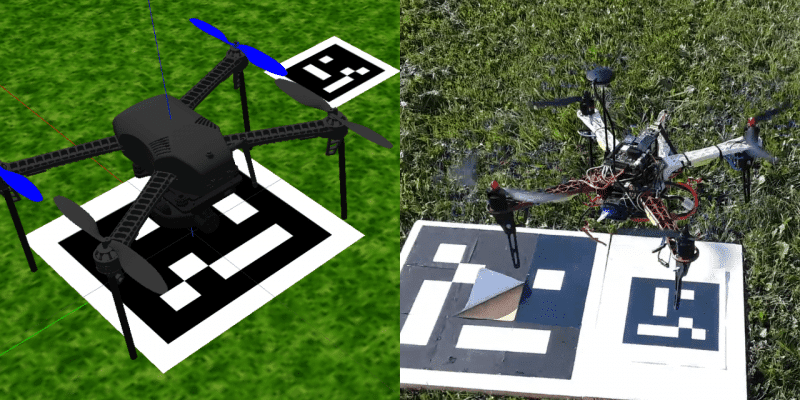
What does the Sonoran Desert Institute cost for students preparing to work in regulated aviation and drone logistics fields? In commercial delivery operations, the highest risk often concentrates in the final moments of flight. An aircraft may travel miles without incident, yet a single misjudged landing can undermine safety, trigger liability, and erode public trust. As a result, precision landing intelligence has become a critical control layer in modern drone delivery systems. The Sonoran Desert Institute (SDI), accredited by the Distance Education Accrediting Commission (DEAC), recognizes how camera systems, high-accuracy global navigation satellite systems (GNSS), and real-time safety checks now define operational reliability in populated environments.
The landing is no longer a simple descent to a set of coordinates. Modern delivery relies on layered verification that confirms a drop zone remains safe at the time of release. Camera systems, high-accuracy global navigation satellite systems, and automated abort logic work together to replace assumptions with real-time checks.
GNSS Provides the Spatial Foundation
Precise positioning forms the base of landing intelligence. Delivery aircraft rely on centimeter-grade GNSS to approach a target location consistently. This accuracy narrows the margin of error, placing aircraft directly above designated drop zones rather than general areas.
High-accuracy positioning supports repeatability. Operators define approved landing points during route planning, often verified during test flights. Each subsequent delivery returns to the same coordinates, reducing variability and supporting predictable outcomes for residents. GNSS accuracy also supports vertical control.
Cameras Verify the Environment
Position alone does not guarantee safety. Conditions on the ground change between planning and arrival. The downward-facing cameras provide live verification during descent. Aircraft compare real-time imagery with stored reference images of the delivery site. The system verifies that the landing zone remains free of people, animals, and obstructions, flagging any deviation before payload release.
This visual verification manages dynamic risk, recognizing that a yard clear moments earlier may later contain vehicles, furniture, or other obstacles. Automated image comparison detects such changes more reliably than distant human observation.
Automated Abort Logic Enforces Caution
The most critical feature of precision landing intelligence is the ability to stop. Automated abort logic grants the aircraft the authority to halt a release when conditions fall outside approved parameters.
Abort triggers include visual mismatches, unexpected movement within the zone, or navigation uncertainty. When triggered, the aircraft ascends or holds position, preserving separation until a decision is made. In many systems, a human supervisor reviews the situation before authorizing another attempt.
This approach replaces irreversible actions with reversible ones. Once a package leaves the aircraft, options narrow. Abort logic restricts release to moments when all real-time checks pass. Logs record every abort event. Operators review these records to refine thresholds and improve site selection.
Layered Intelligence Reduces Liability
Precision landing intelligence lowers risk exposure. Insurers assess whether operators use systems that prevent unintended drops or damage to property. Verified placement and abort capability reduce claims tied to mishaps.
These systems also support regulatory confidence. Documented use of real-time checks aligns with safety management principles. Clear procedures for when and why a release stops demonstrate control. Cost models reflect this benefit. While sensors and software add expense, they reduce losses and delays linked to incidents. Reliable landings support route density by maintaining community acceptance and trust.
Integration With Release Methods
Landing intelligence works in concert with delivery mechanisms. Winch systems rely on stable hover and clear zones to lower packages safely and securely. Camera verification monitors the tether path for obstructions during descent.
Parachute drops also benefit. Visual checks confirm clearance before release, reducing the chance of drift into unintended areas. GNSS accuracy enables aircraft to be positioned at optimal release points based on wind conditions. In both cases, intelligence systems adapt to context. The same aircraft may serve different environments, relying on consistent checks to manage varying risk profiles.
Workforce Skills Follow System Complexity
Precision landing intelligence shifts operator roles. Pilots and supervisors monitor system outputs rather than making subjective judgments. Understanding how sensors interpret data becomes essential.
Technicians maintain cameras, position antennas, and process units. Calibration and alignment checks ensure accuracy over time. Training covers both hardware and software aspects of landing systems.
Students exploring aviation technology careers consider this environment. Programs that address sensor integration, data interpretation, and regulatory context align with industry needs. Sonoran Desert Institute cost considerations appear in student planning as learners compare options suited to regulated, systems-driven operations.
Community Trust Depends on Outcomes
Residents judge delivery services based on their experiences. Accurate placement and aborted drops when conditions change build confidence. Precision landing intelligence supports this consistency.
Transparency helps reinforce trust. Operators explain how systems prevent unsafe releases and why aircraft may pause or depart without delivering their cargo. Understanding these safeguards reduces concern when flights behave cautiously. Predictable landings normalize delivery activity. Communities accept aircraft that demonstrate restraint and control.
Documentation Connects Intelligence to Approval
Regulators review how landing intelligence is documented. Manuals describe sensor capabilities, thresholds, and response logic. Inspectors assess whether practice matches text.
Clear documentation supports approval speed. Operators that articulate how systems verify safety and prevent release errors move through review phases more efficiently. This clarity underscores the importance of documentation as a key operational asset. Updates follow operational learning. Abort data informs threshold adjustments and site selection. Manuals evolve to reflect improved understanding, maintaining alignment between systems and oversight.
Intelligence Defines the Final Decision
In the delivery aviation industry, the decision to release a package carries significant weight. Precision landing intelligence ensures that decisions are based on verified conditions rather than assumptions. GNSS positions aircraft accurately, cameras confirm reality, and abort logic enforces discipline. For operators, these systems protect safety and scale. For workers, they define the required skills. Education choices align with this reality, with cost transparency supporting informed planning. Sonoran Desert Institute cost considerations align with broader evaluations of programs that are regulated by delivery operations.
As delivery aircraft become familiar sights, the quiet success of each flight depends on what happens in the final seconds. Precision landing intelligence turns those moments into controlled outcomes, proving that safety at the doorstep begins long before descent.









Comments