
 By
By 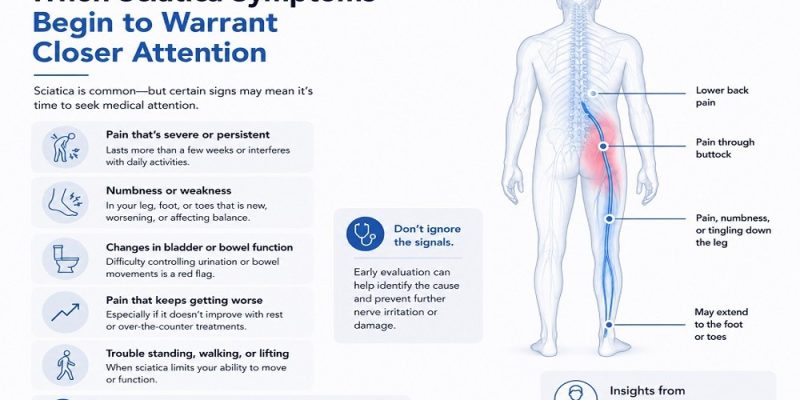
Sciatica is often described in simple terms, typically as pain that travels from the lower back down into the leg. While that description captures the general pattern, it does not fully reflect how symptoms can change over time or what those changes may indicate. For some patients, sciatica appears suddenly and improves with rest or conservative care. Dr. Larry Davidson, a board-certified neurosurgeon with fellowship training in complex spinal surgery, often evaluates these cases by looking at how symptoms develop rather than focusing solely on how they feel now.
Understanding when sciatica requires specialist review involves recognizing patterns that suggest the condition is no longer resolving on its own. These patterns often develop gradually, making them easy to overlook at first.
How Sciatica Follows a Predictable Path
Sciatica typically develops when a nerve root in the lower spine is compressed or irritated. This compression can occur due to a herniated disc, spinal stenosis, or other structural changes that affect the space around the nerve.
One of the defining features of sciatica is the way symptoms follow a specific pathway. Pain, tingling, or numbness may travel from the lower back through the hip and down into the leg, often affecting only one side of the body. This pattern reflects the distribution of the sciatic nerve and helps distinguish it from other types of back or leg pain.
When Symptoms Persist Beyond Initial Expectations
Many cases of sciatica improve within a relatively short period, especially when managed with rest, physical therapy, and activity adjustments. In these situations, symptoms tend to lessen as inflammation decreases, and the affected nerve begins to recover.
However, when symptoms persist beyond this expected timeframe or fail to respond to conservative measures, it may indicate that the underlying issue is still present. Persistent pain that interferes with movement or daily activity often suggests that the condition is not resolving on its own. This shift from temporary discomfort to ongoing limitation is often one of the clearest signs that further evaluation may be necessary.
Changes in Pain That Suggest Progression
The way pain behaves over time can provide important insight into how the condition is developing. Sciatic pain may begin as intermittent discomfort but become more consistent as the underlying issue persists.
In some cases, the intensity of pain may fluctuate, but the pattern remains unchanged. In others, the pain may begin to spread or affect a larger area of the leg. These changes suggest that the nerve may be experiencing continued or increasing pressure.
When Numbness and Tingling Become More Prominent
In addition to pain, many patients with sciatica experience numbness or tingling in the affected leg. These sensations can indicate that the nerve is not functioning normally, particularly when they occur consistently.
As these symptoms become more noticeable, they may begin to affect coordination and awareness of movement. Areas of reduced sensation can make it more difficult to detect changes in position or pressure, which can influence balance.
The Importance of Recognizing Weakness
Weakness is often a more significant indicator of nerve involvement than pain alone. When a nerve is compressed to the point that it affects muscle function, it can lead to noticeable changes in strength and control. It may present difficulty lifting the foot, reduced stability while walking, or challenges with movements that previously felt routine. These changes can develop gradually, making them easy to dismiss at first.
Dr. Larry Davidson points out that when strength begins to change alongside sensory symptoms, it reflects a deeper level of nerve involvement that warrants closer attention. This combination of symptoms is typically evaluated more carefully to understand how the condition is progressing.
How Sciatica Affects Everyday Movement
As symptoms persist, sciatica can begin to influence how the body moves during everyday activities. Sitting for extended periods, standing, or walking may become increasingly uncomfortable, leading to adjustments in posture and movement.
These adaptations may provide short-term relief but can also create additional strain on other areas of the body. Over time, it can contribute to a broader pattern of discomfort that extends beyond the source. These functional changes often provide a clearer indication of the condition’s impact than pain alone.
Why Timing Matters in Evaluation
The timing of evaluation plays an important role in understanding and managing sciatica. Early assessment can help identify the cause of symptoms and determine whether they are likely to improve with continued conservative care.
When symptoms persist or begin to progress, evaluation provides an opportunity to reassess the condition and consider whether additional intervention may be needed. It does not necessarily mean surgery, but it helps clarify the next steps in care. Addressing the condition at the right time can help prevent further progression and support more effective management.
Exploring Treatment Based on Symptom Patterns
Treatment decisions are often guided by how symptoms present and change over time. Stable or improving symptoms may continue to be managed with non-surgical approaches such as physical therapy, targeted exercises, and activity modification.
When symptoms persist or begin to affect function more significantly, additional options may be considered. These decisions are based on how clearly symptoms align with diagnostic findings and how much they interfere with daily life. Understanding this stepwise approach helps patients see treatment as a progression rather than a single decision point.
Taking a Closer Look at Ongoing Symptoms
Sciatica can begin as a manageable condition, but its progression depends on the underlying cause and how symptoms develop over time. Paying attention to changes in pain, sensation, and function provides important insight into when further evaluation may be needed.
Rather than focusing on individual symptoms in isolation, looking at the overall pattern helps create a more complete picture. This perspective supports earlier recognition of changes that may require attention and allows for more informed decisions about care.
Recognizing When Specialist Input Becomes Valuable
Not all cases of sciatica require specialist care, but certain patterns suggest that a more detailed evaluation may be beneficial. Persistent symptoms, progression of numbness or the development of weakness are all indicators that additional expertise may help clarify the situation.
Specialists can provide a more focused assessment, using detailed clinical evaluation and imaging to better understand the underlying cause. This level of insight helps keep treatment recommendations aligned with the specific conditions. Recognizing when to seek this level of care allows patients to move forward with greater confidence.











Comments